
The latest government NIH jobs 2026 are creating unprecedented opportunities for healthcare professionals, researchers, and support staff seeking stable, rewarding careers in public health. If you’re tired of job hunting through countless portals only to find outdated listings or dead-end applications, you’ve landed in the right place. The National Institutes of Health continues to expand its workforce this year, offering positions that combine competitive federal benefits with meaningful work that impacts millions of lives.
Landing a government position at NIH isn’t just about submitting an application—it’s about understanding the unique federal hiring process, knowing which positions match your qualifications, and timing your application perfectly. This comprehensive guide walks you through everything you need to know about securing your dream role at one of America’s premier health research institutions.
Why NIH Jobs Stand Out Among Government Positions
The National Institutes of Health represents the crown jewel of federal healthcare employment. Unlike private sector positions that may prioritize profit margins, NIH careers focus on groundbreaking research, patient care innovation, and public health advancement.
Working at NIH means joining 27 different institutes and centers, each dedicated to specific health concerns ranging from cancer research to mental health studies. The organization employs over 20,000 people across various disciplines, creating a diverse ecosystem where scientists collaborate with administrative professionals, IT specialists work alongside clinicians, and everyone contributes to the mission of enhancing health and reducing illness.
Federal benefits package includes:
- Comprehensive health insurance with multiple plan options
- Defined benefit pension plan (FERS) plus TSP matching contributions
- Generous annual and sick leave accrual
- Work-life balance programs including flexible schedules
- Student loan repayment assistance programs
- Professional development and training opportunities
The compensation structure follows the General Schedule (GS) pay scale, ensuring transparent, equitable salary progressions based on experience and performance. Entry-level positions typically start at GS-5 through GS-7, while specialized research roles and senior positions can reach GS-13 through GS-15 levels.
Types of NIH Positions Available in 2026
Research and Scientific Roles
Postdoctoral fellows, research biologists, clinical investigators, and laboratory technicians form the backbone of NIH’s scientific enterprise. These positions require advanced degrees and specialized training, offering opportunities to work on cutting-edge studies that shape medical understanding worldwide.
Current demand focuses heavily on immunology researchers, data scientists with bioinformatics backgrounds, and clinical trial coordinators. The COVID-19 pandemic highlighted the critical importance of infectious disease research, creating sustained hiring needs in virology and epidemiology departments.
Administrative and Support Positions
Program analysts, human resources specialists, grants management officers, and administrative assistants keep NIH operations running smoothly. These roles don’t always require advanced scientific degrees but demand organizational excellence, attention to detail, and understanding of federal regulations.
Support positions offer excellent entry points for career changers or recent graduates seeking federal employment stability. Many successful NIH executives began their careers in administrative capacities before transitioning to leadership roles.
Healthcare and Clinical Staff
Nurses, physicians, dentists, and allied health professionals provide direct patient care through NIH’s Clinical Center. These positions combine clinical practice with research participation, allowing healthcare providers to stay at the forefront of medical innovation.
The Clinical Center operates as the nation’s largest hospital entirely dedicated to clinical research, treating over 10,000 patients annually in studies exploring new treatments for diseases affecting both common and rare conditions.
Information Technology and Digital Roles
Cybersecurity specialists, software developers, database administrators, and IT project managers support NIH’s massive digital infrastructure. With increasing emphasis on electronic health records, artificial intelligence in medical research, and data security, technology positions represent some of the fastest-growing career paths at NIH.
How to Find and Apply for NIH Jobs in 2026
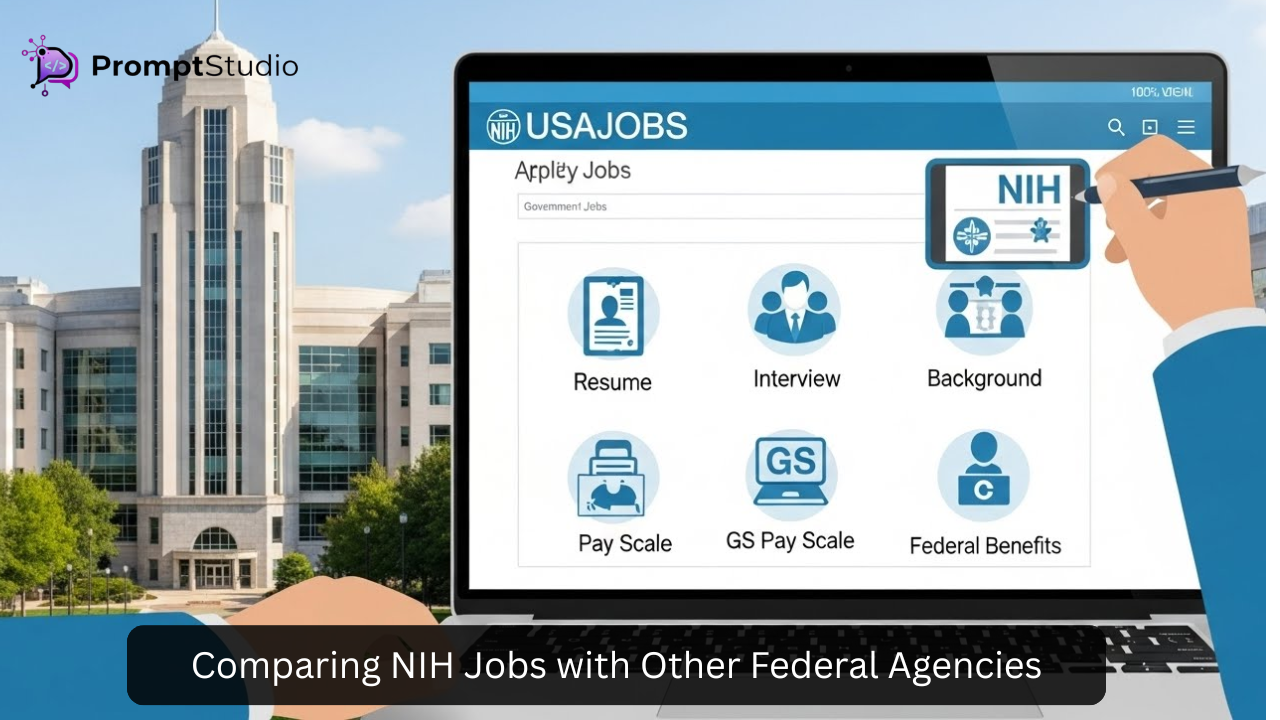
Using USAJOBS Effectively
USAJOBS.gov serves as the official portal for all federal government positions, including NIH openings. However, navigating this platform requires strategy beyond simple keyword searches.
Create a comprehensive profile before applying. Upload your resume in the federal format, which differs significantly from private sector resumes by emphasizing specific accomplishments, detailed work histories, and relevant training. Federal hiring managers expect to see month-and-year employment dates, supervisor contact information, and explicit connections between your experience and position requirements.
Set up job alerts for “National Institutes of Health” combined with your specialty areas. NIH posts new positions regularly, and competitive roles may close quickly once they reach application caps. Enable email notifications to catch openings within hours of posting.
Understanding Announcement Types
Open to the Public announcements accept applications from any qualified U.S. citizen. These positions typically receive hundreds of applications, making them highly competitive.
Merit Promotion announcements target current federal employees or individuals with special hiring authorities. If you’re already working in government, these announcements offer advantages through reduced competition.
Direct Hire Authority positions streamline hiring for hard-to-fill roles, particularly in STEM fields. These opportunities may have simplified application processes and faster selection timelines.
Crafting Your Federal Resume
Federal resumes require exhaustive detail compared to private sector formats. Include every relevant certification, training course, and professional development activity. Quantify achievements wherever possible—instead of “managed research projects,” write “coordinated 7 concurrent clinical trials involving 300+ participants, ensuring 98% protocol compliance.”
Address all specialized experience requirements explicitly. Hiring managers use automated systems that scan for specific keywords and phrases from the announcement. If a posting requires “experience with grant management,” those exact words should appear in your work history descriptions.
Insider Tips for NIH Application Success
Timing Your Application Strategically
Submit applications early in the announcement period but avoid being the very first applicant. HR specialists often process applications in batches, and early submissions sometimes face technical glitches or system updates.
The federal fiscal year runs October through September, with significant hiring activity occurring in October/November as new budgets activate and January/February following holiday slowdowns. Position availability also increases during summer months when staff transitions occur.
Leveraging Pathways Programs
Recent graduates should explore the Pathways Programs, which provide entry points for students and recent degree recipients. The Recent Graduates Program accepts applicants within two years of degree completion, offering conversion to permanent employment after successful program completion.
Veterans receive substantial preference in federal hiring through various authorities. If you served in the military, ensure your DD-214 documentation is uploaded and your veteran status is properly indicated on applications.
Preparing for the Interview Process
NIH interviews often involve multiple rounds, including technical assessments, panel interviews, and meetings with potential supervisors. Research the specific institute or center beforehand. Understand their current research priorities, recent publications, and organizational challenges.
Prepare examples following the STAR method (Situation, Task, Action, Result) that demonstrate competencies listed in the job announcement. Federal interviewers frequently ask behavioral questions designed to assess how you’ve handled specific situations in previous roles.
Comparing NIH Jobs with Other Federal Agencies
| Factor | NIH | CDC | FDA | VA Health |
| Primary Focus | Research & Clinical Trials | Disease Prevention | Regulation & Approval | Patient Care |
| Location Options | Primarily Maryland Campus | Atlanta & Regional | Multiple Sites | Nationwide Facilities |
| Research Opportunities | Extensive | Moderate | Limited | Growing |
| Career Advancement | Strong Internal Mobility | Good | Excellent | Variable by Facility |
NIH offers unique advantages through its concentrated research mission and campus environment. The main Bethesda, Maryland campus creates a collaborative atmosphere where spontaneous interactions between disciplines spark innovation. However, this geographic concentration means fewer remote work options compared to agencies with distributed workforces.
The Centers for Disease Control (CDC) provides more field epidemiology opportunities for those interested in outbreak investigations and international health work. The Food and Drug Administration (FDA) suits individuals drawn to regulatory science and policy implementation. Veterans Affairs (VA) healthcare facilities offer the most direct patient care positions but with less research emphasis outside affiliated academic centers.
Salary Expectations and Compensation Details
Starting salaries for NIH positions vary dramatically based on role, location, and qualifications. The GS pay scale includes locality adjustments, with the Washington-Baltimore area receiving approximately 32% above base rates.
Entry-level research assistants (GS-5) earn roughly $38,000 annually in the locality area. Experienced scientists with doctoral degrees typically enter at GS-11 through GS-13, translating to $72,000 to $108,000 annually. Senior investigators and institute directors can exceed $200,000 through the Senior Executive Service pay structure.
Beyond base salary, consider the comprehensive benefits package. Federal health insurance premiums are significantly subsidized, with the government covering approximately 72% of costs. The pension system provides lifetime income security, and the Thrift Savings Plan operates as one of the nation’s best-managed retirement investment programs with exceptionally low fees.
Frequently Asked Questions About NIH Employment
How long does the NIH hiring process take?
Federal hiring timelines extend significantly beyond private sector norms. From application closing date to final offer, expect 8-16 weeks minimum. Complex positions requiring extensive security clearances may take 6-9 months. Stay patient and continue other job searches while your NIH application processes.
Do I need a security clearance for NIH jobs?
Most NIH positions require moderate background investigations rather than full security clearances. However, roles involving sensitive patient data, classified research, or access to controlled substances undergo more extensive vetting. The background check examines criminal history, credit history, employment verification, and reference contacts.
Can international candidates apply for NIH positions?
Generally, NIH positions require U.S. citizenship due to federal employment regulations. Limited exceptions exist for certain research fellowships or positions sponsored through specific programs, but these represent rare circumstances rather than standard practice.
What happens after I apply to an NIH job?
After submission, USAJOBS confirms receipt of your application. HR specialists review applications against minimum qualifications, creating a “referred” or “not referred” status. Referred candidates may face additional assessments before selection for interviews. The process includes multiple checkpoints, and communication often occurs via email, so monitor your USAJOBS account and inbox regularly.
Does NIH offer remote work options?
Remote work availability expanded following the pandemic, but policies vary by position and institute. Laboratory-based research roles require on-site presence, while many administrative, data analysis, and program management positions now offer telework arrangements. Current trends indicate hybrid schedules (2-3 days on-campus) becoming standard for eligible positions.
Taking Your Next Steps Toward NIH Employment
The latest government NIH jobs 2026 represent more than employment opportunities—they’re invitations to contribute to medical breakthroughs that improve human health across generations. Whether you’re a seasoned researcher seeking cutting-edge collaboration or a skilled professional wanting stable, meaningful work, NIH offers career paths aligned with both personal fulfillment and public service.
Start by creating your USAJOBS profile today. Upload a federal-format resume highlighting your most relevant qualifications. Set up targeted job alerts for NIH positions matching your expertise. Research the institutes and centers whose missions resonate with your professional interests and values.
The federal hiring process rewards persistence, attention to detail, and thorough preparation. While the timeline may test your patience, successful candidates consistently report that NIH careers justify the wait. Your future colleagues are waiting—take that first step by exploring current openings and submitting your application this week.